
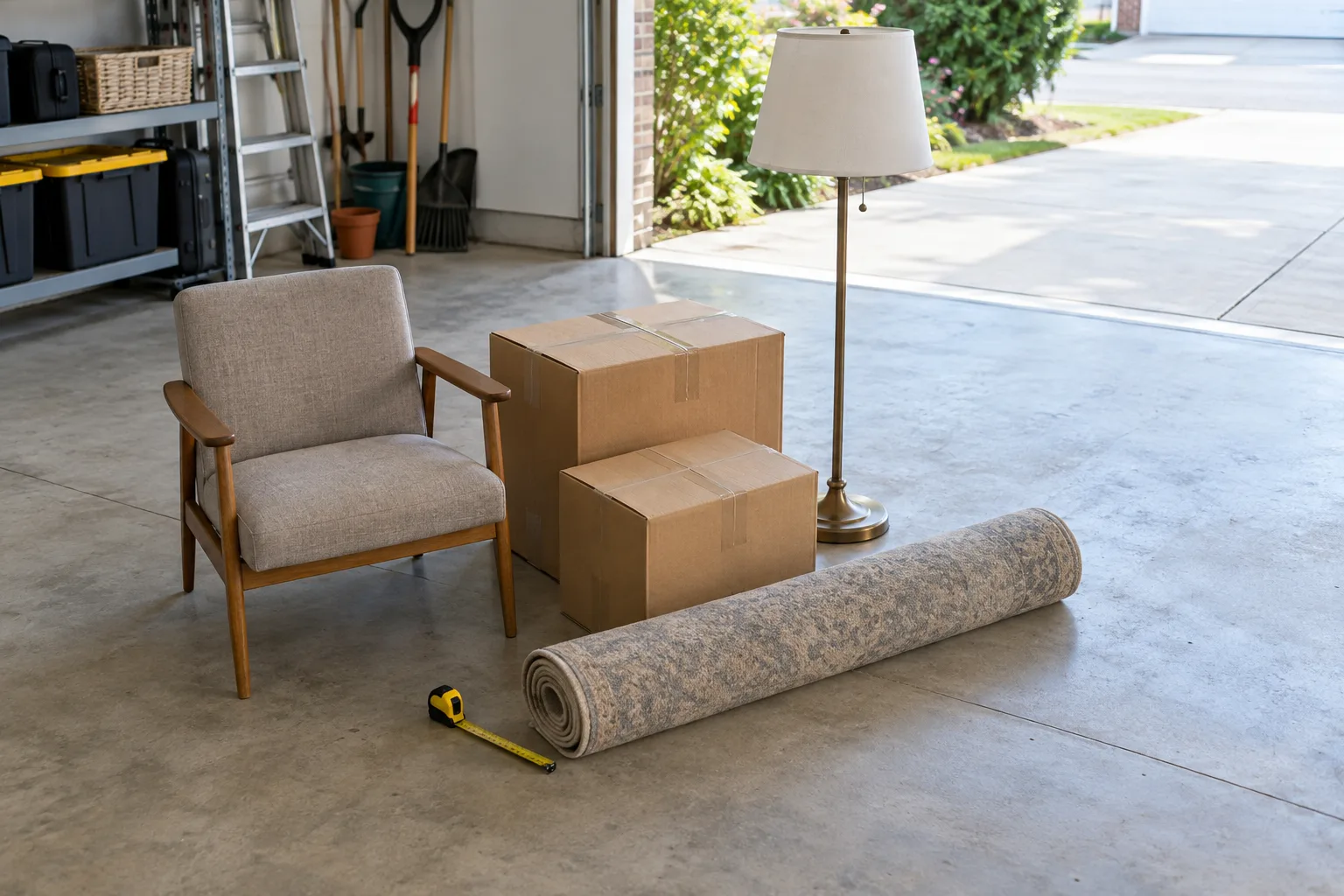
You do not need to count every small object before calling. Build a short room-by-room list, photograph the load from more than one angle, and describe the path between the items and the truck. That gives the provider enough context to ask better questions.
Start with the pieces that define the load
Walk through the property once without moving anything. Write down the bulky pieces first: sofa, mattress, dresser, table, shelving, refrigerator, washer, or similar items. Then estimate the rest by container or zone, such as “six medium boxes in the garage” or “loose household items covering half of one basement wall.”
The supplied operating-provider source says its pricing is based on truck space and that a quote is discussed before work begins. Volume is useful, but it is not the only detail. A heavy object at the top of a tight stair can require more handling than the same object beside a driveway. See the household junk removal page for the service scope.
| Record | Useful detail | Why it helps |
|---|---|---|
| Large pieces | Type, quantity, rough size, and room | Shows what may shape truck space and labor |
| Small-item volume | Number of bags or boxes, or the area covered | Avoids pretending you know an exact count |
| Condition | Dry, broken, sharp, wet, contaminated, or unusually heavy | Flags handling and acceptance questions |
| Material | Electronics, paint, batteries, tires, construction debris, or appliances | Different materials may follow different disposal rules |
Take photos that show scale and route
One close photo rarely explains a load. Take a wide photo of each room or pile, then a second angle if items hide behind one another. Photograph the largest pieces in full. Include the stair landing, narrow door, elevator, gate, or driveway when access may affect the work.
Five-photo minimum for a mixed load
- One wide view of the main pile
- A second angle of the same pile
- The largest or heaviest object
- The tightest point on the exit path
- The curb, driveway, or loading area
Keep personal papers, family photos, medicine labels, house numbers, and vehicle plates out of the frame. If you send photos by email, remember that they leave this website and are handled by your email provider and the operating provider.
Describe the route from room to truck
Count flights of stairs and note sharp turns, low ceilings, narrow landings, porch steps, elevators, long hallways, locked gates, and parking restrictions. Measure a questionable opening instead of saying it “looks tight.” For a large piece, use the furniture measurement guide.
Clear ordinary trip hazards only when you can do so safely. Do not move a bulky piece into a worse position for the sake of a photo. OSHA’s materials-handling guidance recommends preplanning access and using help or mechanical means for heavy or bulky loads. The advice is written for workplaces, but the hazard is easy to recognize at home: an awkward object can block sight and force twisting. Review OSHA’s heavy-lifting guidance.
Questions to ask before you accept the estimate
- Which listed items are included, and which are not?
- Is the estimate based on truck space, labor, material type, or a combination?
- Can the amount change after the crew sees the load? If so, when is the final amount confirmed?
- Does the crew remove items from inside, or must anything be moved first?
- Who handles disassembly or appliance disconnection?
- What happens if the load contains an item the provider cannot accept?
Keep the accepted item list and access notes with you on pickup day. If the load changes, say so before work starts. To discuss the actual job, call or email the operating provider.
- OSHA heavy lifting guidance, United States workplace safety guidance